Properties Maintained Clear of Fire Risk
Underbrush Removal in Many for wooded properties requiring vegetation management and improved accessibility
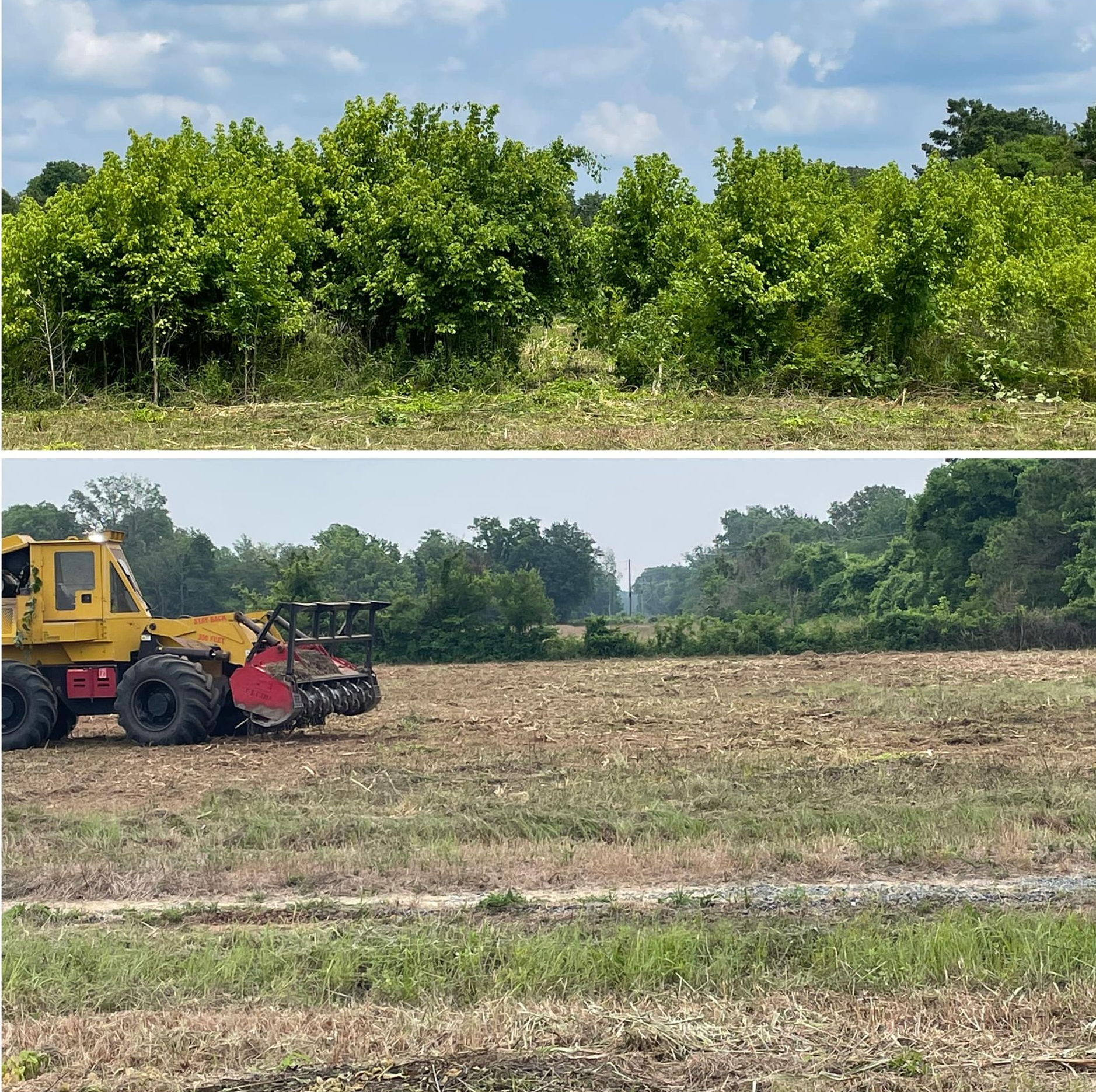
Thick underbrush accumulates quickly in Louisiana's climate, turning wooded properties into impenetrable tangles of briars, saplings, and vines within just a few growing seasons. Louisiana Forestry Solutions provides underbrush removal that clears ground-level vegetation while leaving mature trees standing, reducing wildfire fuel loads, improving visibility across the property, and restoring access for walking, maintenance, or equipment operation. This selective clearing maintains the wooded character of the property while eliminating the dense growth that creates safety hazards and prevents you from actually using the land.
The work targets small trees under six inches in diameter, thick brush including privet and yaupon, thorny vines like greenbrier, and accumulated deadfall that creates fuel continuity from the ground into tree canopies. Northwest Louisiana's extended growing season from March through October allows woody vegetation to put on significant growth each year, and properties left unmanaged for even three to five years often develop underbrush dense enough to completely obscure the ground and block foot traffic. Removal methods depend on property size and vegetation type, ranging from forestry mulching that grinds material in place to selective cutting and removal where a cleaner finish is needed.
Request a property assessment to identify problem areas and determine the most effective removal approach for your acreage and vegetation conditions.
What Underbrush Removal Actually Accomplishes
Clearing underbrush creates immediate visual and functional changes by opening sight lines through wooded areas, exposing the ground surface for easier walking, and eliminating the ladder fuels that allow ground fires to climb into tree canopies during dry conditions. The process removes fire risk without eliminating the shade, erosion control, and wildlife value that mature trees provide. Properties near structures benefit particularly from defensible space that prevents vegetation from conducting fire directly to buildings during wildfire events, which occur periodically in Louisiana during extended drought periods despite the generally humid climate.
After removal finishes, you'll notice clear ground beneath remaining trees, visible property boundaries and terrain features previously hidden by dense growth, and restored access for foot traffic or ATV use without fighting through briars and brush. The property becomes usable for recreation, easier to monitor for trespassers or damage, and significantly safer if fire threatens the area since fuel continuity from ground to canopy is broken.
Underbrush regrows over time and properties typically need maintenance clearing every three to five years to prevent vegetation from returning to previous density levels. Species like Chinese privet resprout aggressively from root systems and may require herbicide treatment after cutting to prevent immediate regrowth that renders clearing ineffective within a single growing season.
Questions Before Starting Your Project
Property owners often need clarification on what underbrush removal includes, how it differs from complete clearing, and what ongoing maintenance the property will require afterward.
What's the difference between underbrush removal and land clearing?
Underbrush removal targets ground-level vegetation and small trees while leaving mature trees standing to maintain the wooded property character, whereas land clearing removes all vegetation including large trees to create open ground suitable for construction or agriculture.
How does removal reduce wildfire risk?
Clearing underbrush eliminates the continuous fuel layer that allows ground fires to spread rapidly and climb into tree canopies, creating defensible space where fires lose intensity and become easier to control or extinguish before reaching structures.
Can underbrush removal damage trees you want to keep?
Experienced operators avoid striking tree trunks with equipment and maintain clearance around root zones, though some surface root exposure may occur where underbrush grew directly against tree bases and removal exposes previously covered ground.
What happens to the removed vegetation?
Material gets either mulched in place to create a natural ground cover, hauled off-site for disposal, or cut and piled for later burning depending on your preference, property size, and whether you want a completely clean finish or can accept mulched debris scattered across the ground.
How often does underbrush need re-clearing?
Most Many properties require maintenance clearing every three to five years depending on soil fertility, moisture levels, and how aggressively species like sweet gum and privet resprout from remaining root systems after initial removal.
Louisiana Forestry Solutions handles underbrush removal on properties from a few acres to large wooded tracts requiring ongoing vegetation management. Call (318) 332-1213 to discuss your property's current conditions and schedule a site visit for removal planning and cost estimates.