Vegetation Cleared Without Hauling Debris Off-Site
Forestry Mulching in Many for overgrown trails, pasture reclamation, and right-of-way maintenance
Thick brush and small trees overtake properties faster than most landowners expect, particularly in Louisiana's humid climate where vegetation grows aggressively from spring through fall. Louisiana Forestry Solutions uses forestry mulching to grind standing vegetation into natural mulch that stays on-site, eliminating the need for burning or hauling truckloads of debris to disposal facilities. This approach works well for properties where you want vegetation removed but prefer to avoid the bare, disturbed look that traditional clearing creates.
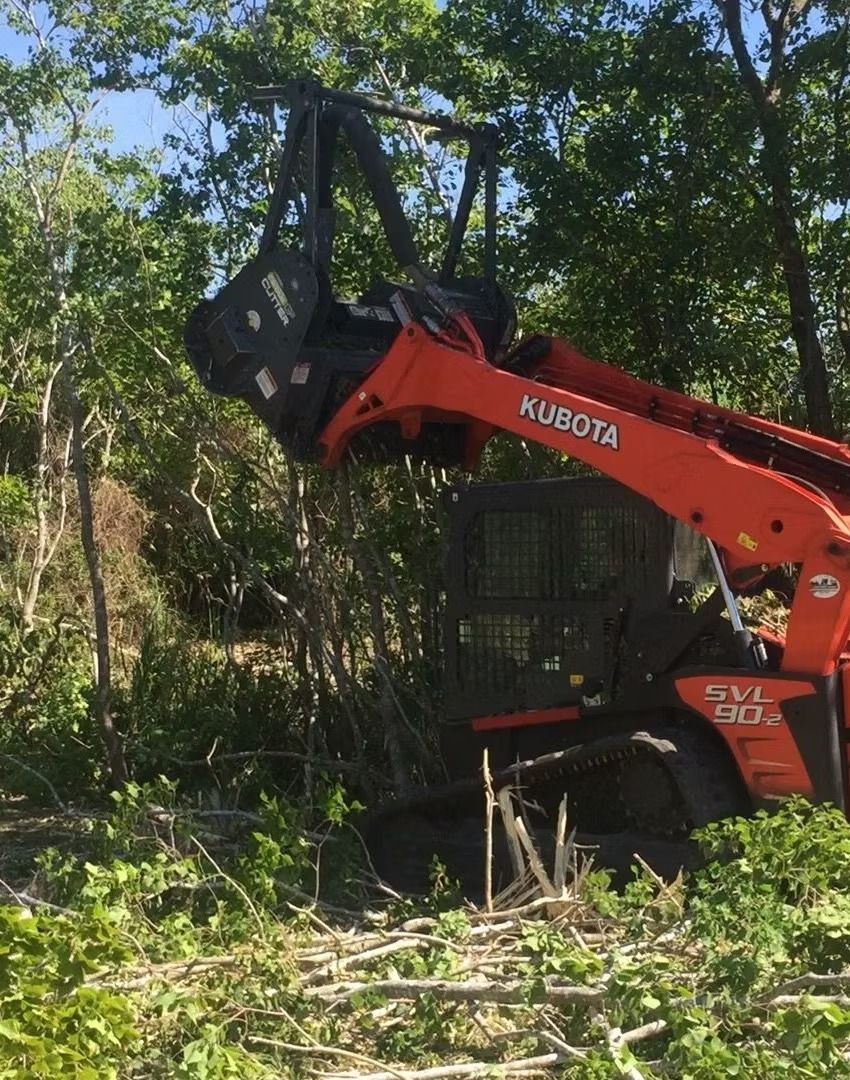
The process uses a specialized drum mulcher mounted on a tracked machine that grinds trees up to eight inches in diameter, thick brush, briars, and saplings into small chips that settle into a uniform layer across the ground. The mulch layer helps retain soil moisture during dry periods, reduces erosion on slopes by protecting the surface from heavy rain impact, and breaks down over time to add organic matter back into the soil. Louisiana's frequent rain events wash mulch into low spots initially, but the material settles within a few weeks and creates a stable surface layer.
Arrange an on-site consultation to evaluate vegetation density and determine mulching feasibility for your property conditions.
How Forestry Mulching Addresses Overgrowth
Mulching grinds vegetation in place rather than cutting and stacking it for later removal, which means the work progresses continuously without stopping to load trucks or build burn piles. The mulcher processes everything from ground level up, leaving a layer of shredded material typically two to four inches deep depending on how thick the original vegetation stood. This method works particularly well for clearing fence lines, establishing trails, reclaiming pastures overtaken by brush, and maintaining utility corridors.
Once mulching finishes, you'll see open ground covered with a consistent layer of wood chips instead of bare dirt, cleared sight lines that reveal property boundaries and terrain features previously hidden by growth, and immediate access for foot traffic or vehicle passage. The mulch stays in place rather than washing away like loose soil would, and it prevents the aggressive resprouting common with species like sweet gum and Chinese tallow that dominate Louisiana's secondary growth patterns.
The process works best on properties with vegetation under eight inches in diameter, as larger trees require conventional clearing with stump removal. Ground disturbance stays minimal compared to tracked excavators that tear up soil while pulling stumps, which matters on properties with established grass or where you want to preserve the existing grade.
Common Questions About This Service
Landowners considering mulching often want to know how it compares to traditional clearing methods and what results to expect on their specific property type.
What size vegetation can forestry mulching handle?
The drum mulcher processes brush, saplings, and trees up to approximately eight inches in diameter, grinding them into chips that range from fingernail-sized pieces to chunks a few inches long depending on wood density and moisture content.
Does the mulch layer attract termites or pests?
Wood chips on the ground surface do not create termite problems the way stacked firewood or buried wood debris can, as the material dries out and breaks down exposed to weather rather than staying moist enough to support insect colonies long-term.
How quickly does mulched vegetation break down?
In Many's climate with warm temperatures and regular rainfall, mulch begins decomposing within a few months and substantially breaks down over one to two years, with decay rates varying based on wood type—pine mulches faster than hardwood species like oak.
Can you mulch around existing trees you want to keep?
Operators can work selectively around trees you designate for retention, though the mulcher needs clearance to maneuver and cannot navigate tight spaces between closely-spaced mature trees without risking damage to bark or surface roots.
What happens if vegetation grows back after mulching?
The mulch layer suppresses some regrowth by blocking sunlight and creating a physical barrier, but species that sprout from root systems will eventually push through and require follow-up treatment with selective herbicide application or periodic re-mulching to maintain cleared conditions.
Louisiana Forestry Solutions provides project estimates based on acreage and vegetation density observed during the site visit. Contact the office to schedule a property assessment and discuss whether mulching or conventional clearing better fits your land management goals.